Nonprofit voter engagement is a powerful way for nonprofits to stand up for the needs of their communities. Registering people to vote, equipping them with information about what’s on their ballot, and reminding them to vote on election day benefits our communities and our sector, far beyond the outcome of any particular election.
Learn more about our Vote with Your Mission initative.
Calnonprofits is committed to ensuring that nonprofit leaders have as much solid dependable election information as possible. Ahead of Election Day (Tuesday, Nov. 3, 2026), on these pages we’ll be offering resources and information on the relevant policy issues at stake, the candidates in key races, and the many ways that 501(c)(3) nonprofits may engage in the voting process while remaining nonpartisan.
For a quick take on CalNonprofits ballot positions, see below; and explore our full 2026 Election Voter Guide.
2026 CA Ballot Measures: CalNonprofits’ Positions
CALNONPROFITS SUPPORTS
Prop 1 – Authorizes Bonds for Housing Affordability Programs. Legislative Statute
Prop 3 – Provides Permanent Funding for Schools and Health Care by Extending Existing Tax on High Incomes. Initiative Constitutional Amendment
CALNONPROFITS OPPOSES
Prop 39 – Prohibits Citizens from Voting Unless They Present Government-Issued Identification. Initiative Constitutional Amendment
Prop 41 – Prohibits New State Taxes that Exclude Revenues from State Spending Limit. Require Audit for New State Special Taxes. Initiative Constitutional Amendment
Prop 42 – Prohibits New State Personal Property Taxes and Certain Retroactive State Taxes. Initiative Constitutional Amendment
Prop 43 – Limits Voters’ Ability to Raise Revenues for Local Government Services. Legislative Constitutional Amendment
Prop 44 – Requires Community Health Clinics Spend 90% Of Revenue on Program Services. Initiative Statute
CalNonprofits 2026 Policy Platform
The nonprofit sector isn’t just looking for a leader; we’re looking for a partner committed to building a stronger and more collaborative California. Nonprofits are indispensable to California’s success – employing more than 1.5 million Californians and securing the health, safety, and vibrancy of every zip code across the state. As the leading voice for the sector, CalNonprofits presents this policy platform to ensure the organizations anchoring our communities have the structural support to thrive.
- Strengthen government-nonprofit partnerships
- Build the economic strength of the nonprofit sector
- Invest in the health and sustainability of the nonprofit workforce
Read our full policy platform that outlines the path to better partnership.
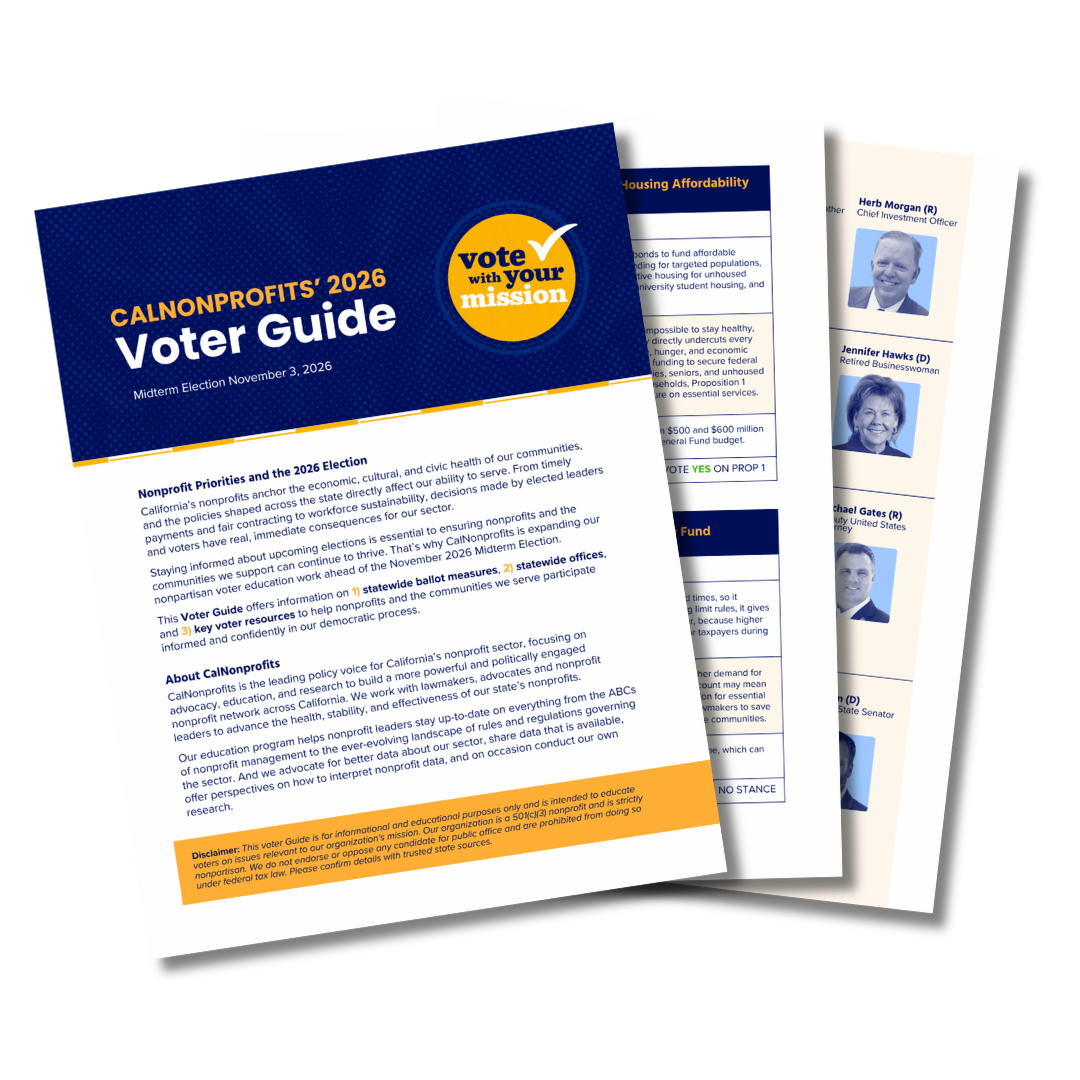
CalNonprofits’ 2026 Voter Guide
California’s nonprofits anchor the economic, cultural, and civic health of our communities, and the policies shaped across the state directly affect our ability to serve. From timely payments and fair contracting to workforce sustainability, decisions made by elected leaders and voters have real, immediate consequences for our sector.
We have created this voter guide to help nonprofits and the communities we serve participate in our democratic process confidently and as informed voters. This guide offers information on:
- Statewide ballot measures
- Statewide elected offices
- Key voter resources
Statewide Offices Candidate Questionnaire
Statewide offices play a defining role in shaping the policy, funding, and regulatory landscape that determines how nonprofits are able to serve Californians. These offices influence charitable giving, grants and contracting, emergency coordination, and other systems central to the sector’s ability to deliver community‑focused services. To give voters a clear look at where candidates stand on these issues, CalNonprofits developed candidate questionnaires.
Each questionnaire was shared with major statewide office candidates, asking them to indicate “yes” or “no” to reflect their stances on key nonprofit policies and priorities related to their respective office, including charitable giving incentives, donor‑advised fund reform, state‑nonprofit partnerships, modernization of grants and contracting, emergency response coordination, workforce challenges, and government protections and safeguards.
Responses are reflected below. “No Response” is listed when candidates did not respond, either to a specific question or to the questionnaire as a whole. We reached out only to major statewide offices with engagement and oversight over policies affecting nonprofits, and we tailored each set of questions to reflect how that office engages with the sector.
Nonprofits rely on charitable giving to fund essential community services. Will you publicly support tax policies that incentivize charitable giving, and oppose tax policies that create barriers to giving or disincentivize support of nonprofits?
| Steve Hilton (R) | No response |
| Xavier Becerra (D) | No response |
Billions of charitable dollars sit idle in Donor-Advised Funds (DAFs) with no legal payout timeline to support the working charitable sector. Additionally, many DAF grants are simply transfers to other DAFs, and private foundations increasingly use DAF transfers to satisfy their 5% minimum payout requirements. Despite this lack of distribution, DAF contributions receive the exact same immediate, maximum tax deductions as direct gifts to working charities. Will you support federal and state reforms establishing strong payout standards for DAFs so these funds reach local communities faster?
| Steve Hilton (R) | No response |
| Xavier Becerra (D) | No response |
Will you support establishing a formal office within the state government to coordinate policy, reduce barriers, and strengthen state-nonprofit partnerships (e.g., similar to the Governor’s Office of Business and Economic Development, or GO-Biz)?
| Steve Hilton (R) | No response |
| Xavier Becerra (D) | No response |
Will you support efforts to modernize state grants and contracting to ensure nonprofits can deliver essential services effectively without having to take on additional debt, including prompt payment, advance payments, and sufficient indirect cost coverage, as recommended by California’s nonpartisan independent state oversight agency, the Little Hoover Commission?
| Steve Hilton (R) | No response |
| Xavier Becerra (D) | No response |
Given that nonprofits serve as key frontline responders during crises, will you support policies that improve state-nonprofit coordination during state emergencies, including adjusting service delivery via contract/grant flexibility and prioritizing on‑the‑ground nonprofit expertise?
| Steve Hilton (R) | No response |
| Xavier Becerra (D) | No response |
California nonprofits are operating in an increasingly hostile federal climate. Will you use the state’s independent authority to implement safeguards that protect California’s nonprofits and their donors from federal attacks, including executive orders, illegal funding cuts, politically motivated federal investigations, or tax-exempt status revocations designed to stifle the work of nonprofits that the current administration disagrees with (e.g. serving immigrant communities, reproductive rights, and climate work)?
| Steve Hilton (R) | No response |
| Xavier Becerra (D) | No response |
California’s 1.5 million nonprofit workers are the backbone of our state’s safety net, yet workforce shortages persist as nonprofits struggle to compete with private sector wages. Nonprofits rely on the federal Public Service Loan Forgiveness (PSLF) program to attract and retain highly qualified staff. Amid rolling federal attacks on these programs, will you commit to advocating for the protection of federal student debt relief programs and PSLF?
| Steve Hilton (R) | No response |
| Xavier Becerra (D) | No response |
Nonprofits rely on charitable giving to fund essential community services. Will you publicly support tax policies that incentivize charitable giving, and oppose tax policies that create barriers to giving or disincentivize support of nonprofits?
| Fiona Ma (D) | YES |
| Gloria Romero (R) | No response |
Billions of charitable dollars sit idle in Donor-Advised Funds (DAFs) with no legal payout timeline to support the working charitable sector. Additionally, many DAF grants are simply transfers to other DAFs, and private foundations increasingly use DAF transfers to satisfy their 5% minimum payout requirements. Despite this lack of distribution, DAF contributions receive the exact same immediate, maximum tax deductions as direct gifts to working charities. Will you support federal and state reforms establishing strong payout standards for DAFs so these funds reach local communities faster?
| Fiona Ma (D) | YES |
| Gloria Romero (R) | No response |
Will you support establishing a formal office within the state government to coordinate policy, reduce barriers, and strengthen state-nonprofit partnerships (e.g., similar to the Governor’s Office of Business and Economic Development, or GO-Biz)?
| Fiona Ma (D) | YES |
| Gloria Romero (R) | No response |
Will you support efforts to modernize state grants and contracting to ensure nonprofits can deliver essential services effectively without having to take on additional debt, including prompt payment, advance payments, and sufficient indirect cost coverage, as recommended by California’s nonpartisan independent state oversight agency, the Little Hoover Commission?
| Fiona Ma (D) | YES |
| Gloria Romero (R) | No response |
Given that nonprofits serve as key frontline responders during crises, will you support policies that improve state-nonprofit coordination during state emergencies, including adjusting service delivery via contract/grant flexibility and prioritizing on‑the‑ground nonprofit expertise?
| Fiona Ma (D) | YES |
| Gloria Romero (R) | No response |
California nonprofits are operating in an increasingly hostile federal climate. Will you use the state’s independent authority to implement safeguards that protect California’s nonprofits and their donors from federal attacks, including executive orders, illegal funding cuts, politically motivated federal investigations, or tax-exempt status revocations designed to stifle the work of nonprofits that the current administration disagrees with (e.g. serving immigrant communities, reproductive rights, and climate work)?
| Fiona Ma (D) | YES |
| Gloria Romero (R) | No response |
California’s 1.5 million nonprofit workers are the backbone of our state’s safety net, yet workforce shortages persist as nonprofits struggle to compete with private sector wages. Nonprofits rely on the federal Public Service Loan Forgiveness (PSLF) program to attract and retain highly qualified staff. Amid rolling federal attacks on these programs, will you commit to advocating for the protection of federal student debt relief programs and PSLF?
| Fiona Ma (D) | YES |
| Gloria Romero (R) | No response |
Nonprofits rely on charitable giving to fund essential community services. Will you publicly support tax policies that incentivize charitable giving, and oppose tax policies that create barriers to giving or disincentivize support of nonprofits?
| Rob Bonta (D) | No response |
| Michael Gates (R) | YES |
Billions of charitable dollars sit idle in Donor-Advised Funds (DAFs) with no legal payout timeline to support the working charitable sector. Additionally, many DAF grants are simply transfers to other DAFs, and private foundations increasingly use DAF transfers to satisfy their 5% minimum payout requirements. Despite this lack of distribution, DAF contributions receive the exact same immediate, maximum tax deductions as direct gifts to working charities. Will you support federal and state reforms establishing strong payout standards for DAFs so these funds reach local communities faster?
| Rob Bonta (D) | No response |
| Michael Gates (R) | YES |
Will you support establishing a formal office within the state government to coordinate policy, reduce barriers, and strengthen state-nonprofit partnerships (e.g., similar to the Governor’s Office of Business and Economic Development, or GO-Biz)?
| Rob Bonta (D) | No response |
| Michael Gates (R) | YES |
Will you support efforts to modernize state grants and contracting to ensure nonprofits can deliver essential services effectively without having to take on additional debt, including prompt payment, advance payments, and sufficient indirect cost coverage, as recommended by California’s nonpartisan independent state oversight agency, the Little Hoover Commission?
| Rob Bonta(D) | No response |
| Michael Gates (R) | YES |
Given that nonprofits serve as key frontline responders during crises, will you support policies that improve state-nonprofit coordination during state emergencies, including adjusting service delivery via contract/grant flexibility and prioritizing on‑the‑ground nonprofit expertise?
| Rob Bonta(D) | No response |
| Michael Gates (R) | YES |
California nonprofits are operating in an increasingly hostile federal climate. Will you use the state’s independent authority to implement safeguards that protect California’s nonprofits and their donors from federal attacks, including executive orders, illegal funding cuts, politically motivated federal investigations, or tax-exempt status revocations designed to stifle the work of nonprofits that the current administration disagrees with (e.g. serving immigrant communities, reproductive rights, and climate work)?
| Rob Bonta (D) | No response |
| Michael Gates (R) | NO |
California’s 1.5 million nonprofit workers are the backbone of our state’s safety net, yet workforce shortages persist as nonprofits struggle to compete with private sector wages. Nonprofits rely on the federal Public Service Loan Forgiveness (PSLF) program to attract and retain highly qualified staff. Amid rolling federal attacks on these programs, will you commit to advocating for the protection of federal student debt relief programs and PSLF?
| Rob Bonta (D) | No response |
| Michael Gates (R) | NO |
Hundreds of online fundraising platforms collect donations for nonprofits every day, often without the nonprofit’s knowledge or consent. Hidden fees, inaccurate organizational listings, withheld funds, and aggressive SEO tactics erode donor trust and divert resources away from the missions nonprofits serve. In alignment with the National Council of Nonprofits’ Principles for Ethical Fundraising — endorsed by 52 state and regional associations representing nearly 40,000 nonprofits nationwide —which explicitly require platforms to secure prior written consent before soliciting funds or using a charity’s logo and brand assets: Do you commit to prioritizing enforcement against online fundraising platforms that operate without explicit nonprofit consent, misuse charitable assets, or engage in deceptive and misleading practices?
| Rob Bonta (D) | No response |
| Michael Gates (R) | YES |
Nonprofits rely on charitable giving to fund essential community services. Will you publicly support tax policies that incentivize charitable giving, and oppose tax policies that create barriers to giving or disincentivize support of nonprofits?
| Ben Allen (D) | YES |
| Jane Kim (D) | YES |
Will you support establishing a formal office within the state government to coordinate policy, reduce barriers, and strengthen state-nonprofit partnerships (e.g., similar to the Governor’s Office of Business and Economic Development, or GO-Biz)?
| Ben Allen (D) | YES |
| Jane Kim (D) | YES |
Will you support efforts to modernize state grants and contracting to ensure nonprofits can deliver essential services effectively without having to take on additional debt, including prompt payment, advance payments, and sufficient indirect cost coverage, as recommended by California’s nonpartisan independent state oversight agency, the Little Hoover Commission?
| Ben Allen (D) | YES |
| Jane Kim (D) | YES |
Given that nonprofits serve as key frontline responders during crises, will you support policies that improve state-nonprofit coordination during state emergencies, including adjusting service delivery via contract/grant flexibility and prioritizing on‑the‑ground nonprofit expertise?
| Ben Allen (D) | YES |
| Jane Kim (D) | YES |
California’s goal of placing all foster youth in family homes is threatened by an ongoing insurance crisis that has forced over 30 nonprofit Foster Family Agencies (FFAs) to close, placing thousands of youth at risk of displacement. As Insurance Commissioner, will you prioritize regulatory action, market interventions, or legislative solutions to stabilize the insurance market for nonprofits serving foster youth so they can secure accessible, affordable liability coverage and prevent further closures?
| Ben Allen (D) | YES |
| Jane Kim (D) | YES |
Nonprofits rely on charitable giving to fund essential community services. Will you publicly support tax policies that incentivize charitable giving, and oppose tax policies that create barriers to giving or disincentivize support of nonprofits?
| Malia Cohen (D) | YES |
| Herb Morgan (R) | YES |
Billions of charitable dollars sit idle in Donor-Advised Funds (DAFs) with no legal payout timeline to support the working charitable sector. Additionally, many DAF grants are simply transfers to other DAFs, and private foundations increasingly use DAF transfers to satisfy their 5% minimum payout requirements. Despite this lack of distribution, DAF contributions receive the exact same immediate, maximum tax deductions as direct gifts to working charities. Will you support federal and state reforms establishing strong payout standards for DAFs so these funds reach local communities faster?
| Malia Cohen (D) | YES |
| Herb Morgan (R) | YES |
Will you support establishing a formal office within the state government to coordinate policy, reduce barriers, and strengthen state-nonprofit partnerships (e.g., similar to the Governor’s Office of Business and Economic Development, or GO-Biz)?
| Malia Cohen (D) | YES |
| Herb Morgan (R) | YES |
Will you support efforts to modernize state grants and contracting to ensure nonprofits can deliver essential services effectively without having to take on additional debt, including prompt payment, advance payments, and sufficient indirect cost coverage, as recommended by California’s nonpartisan independent state oversight agency, the Little Hoover Commission?
| Malia Cohen (D) | YES |
| Herb Morgan (R) | YES |
Given that nonprofits serve as key frontline responders during crises, will you support policies that improve state-nonprofit coordination during state emergencies, including adjusting service delivery via contract/grant flexibility and prioritizing on‑the‑ground nonprofit expertise?
| Malia Cohen (D) | YES |
| Herb Morgan (R) | YES |
California nonprofits face chronic delays in state grant payments, causing severe cash flow instability. Will you commit to implementing Recommendation 11 of the Little Hoover Commission report by creating a specialized grant-payment processing unit within the State Controller’s Office and expanding electronic funds transfers (EFT) to eliminate payment bottlenecks?
| Malia Cohen (D) | YES |
| Herb Morgan (R) | YES |
Disclaimer: This questionnaire is for informational and educational purposes only and is intended to educate voters on candidates’ stances on issues relevant to our organization’s mission. Our organization is a 501(c)(3) nonprofit and is strictly nonpartisan. We do not endorse or oppose any candidate for public office and are prohibited from doing so under federal tax law. Any views expressed in these responses are solely those of the candidates and do not reflect the views or positions of CalNonprofits. All candidates on the ballot for select statewide offices were invited to participate in the questionnaire.
Meet the Candidates 1:1 Webinar Series
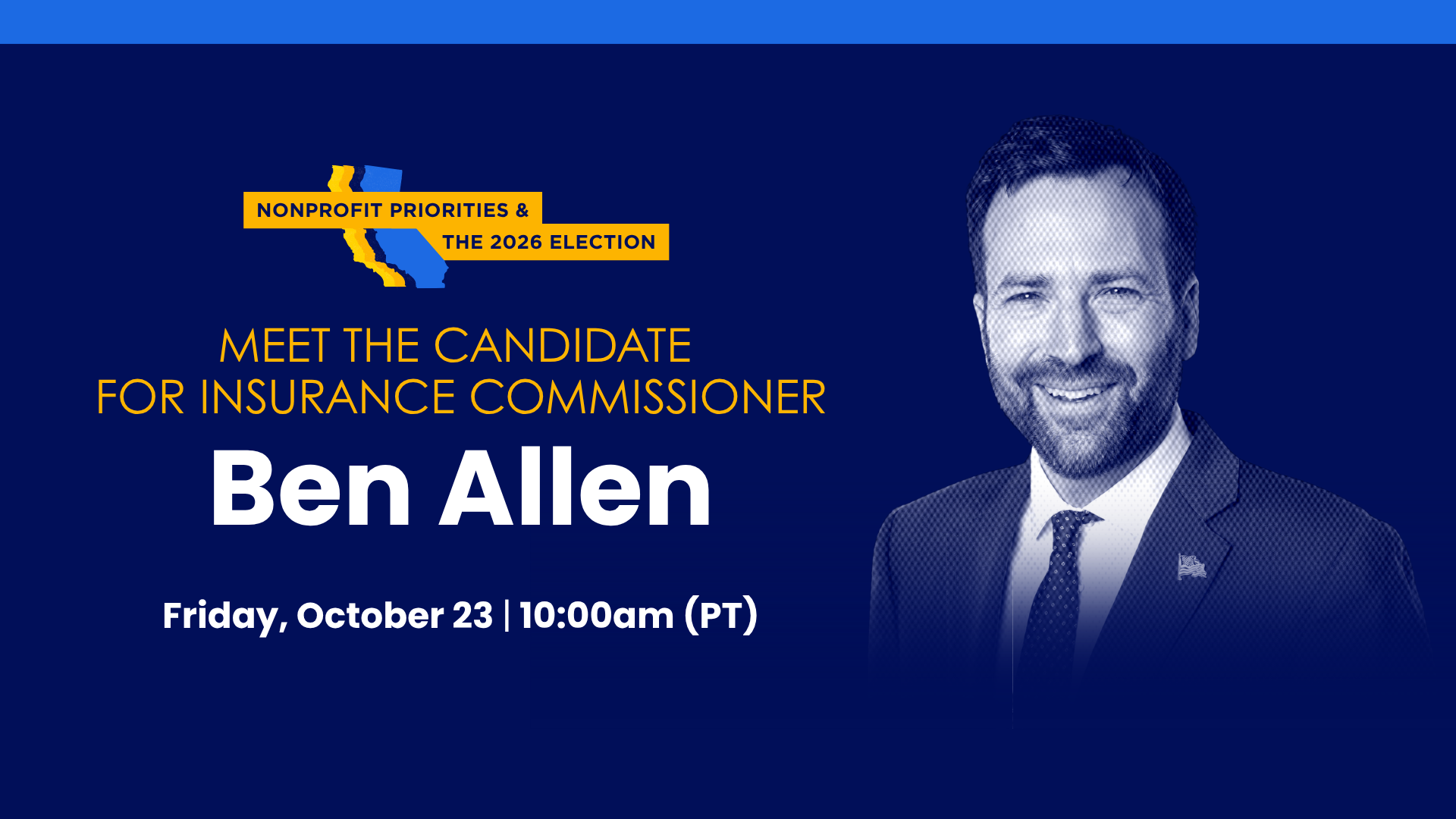
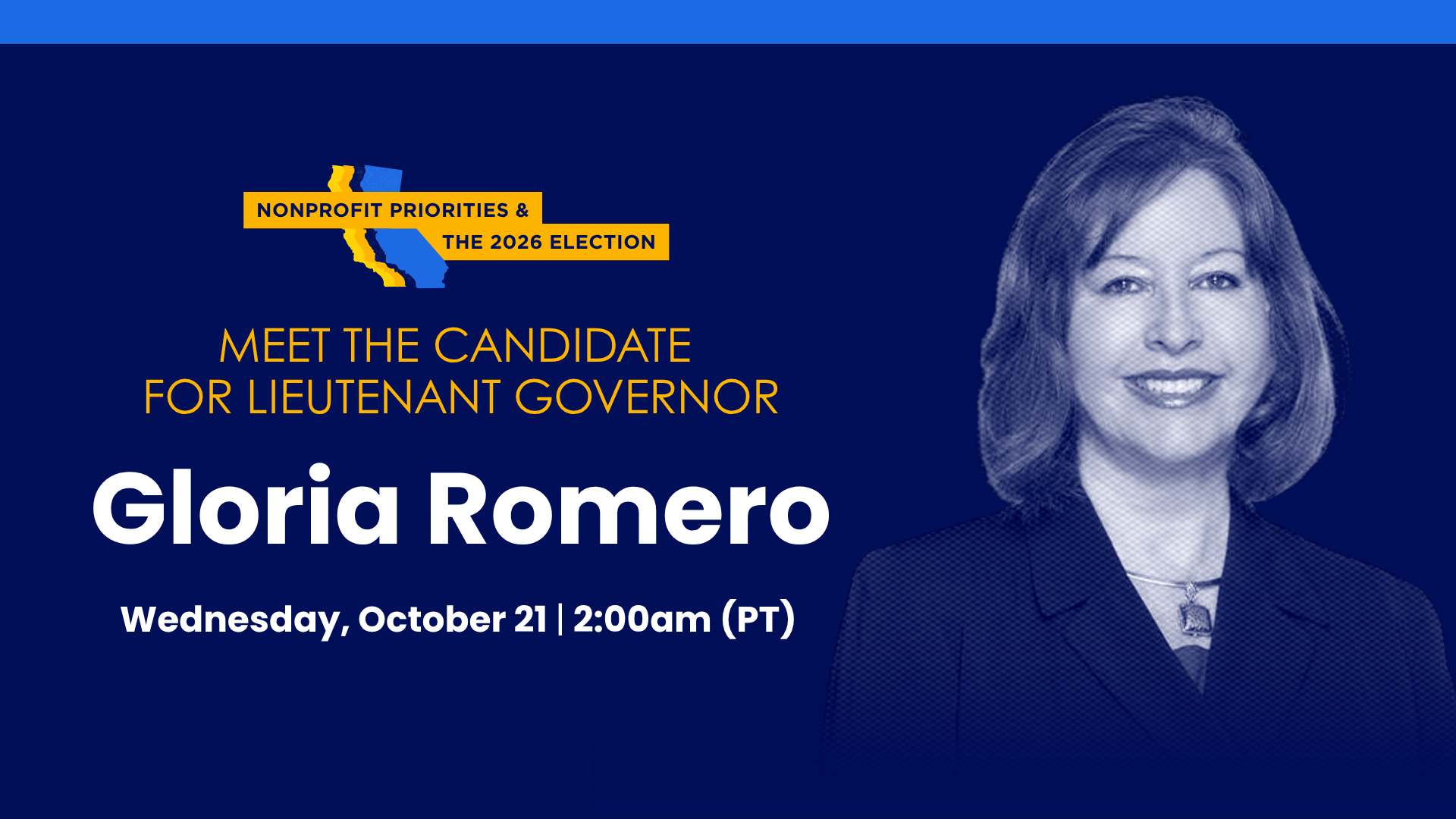
CalNonprofits is proud to host our exclusive “Meet the Candidate” 1:1 webinar series – a dedicated space for nonprofit leaders to hear directly from those seeking statewide elected office. This is your opportunity to hear firsthand how candidates plan to partner with us in strengthening the sector that strengthens California.
In these sessions, we’ll dig into how candidates would address inefficiencies in state contracts and grants, along with their priorities and perspectives on the issues shaping our communities. Following the June primary, CalNonprofits extended invitations to the final two candidates for the following offices: Governor and Lieutenant Governor.
Register for upcoming sessions and view the recordings:


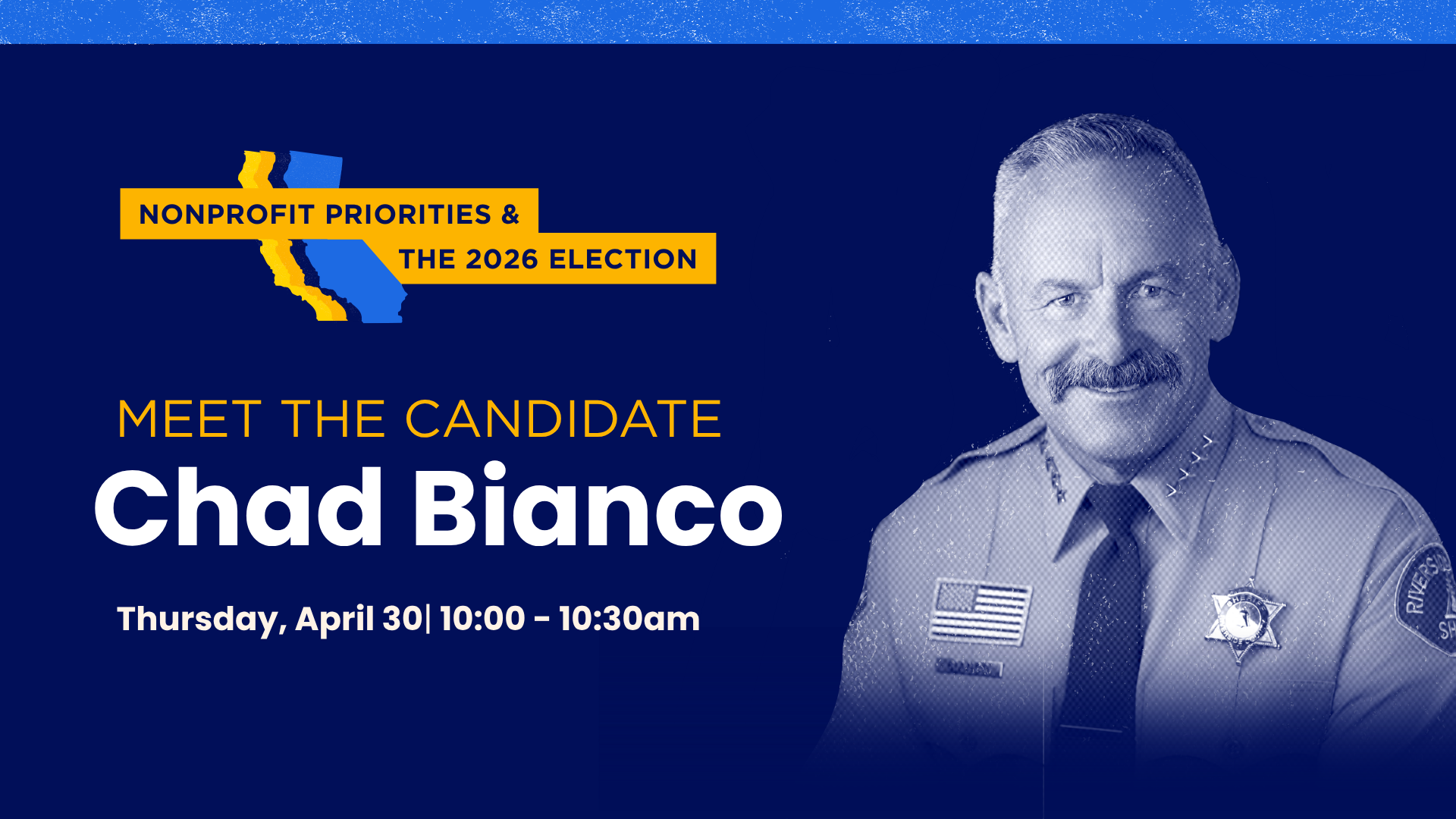
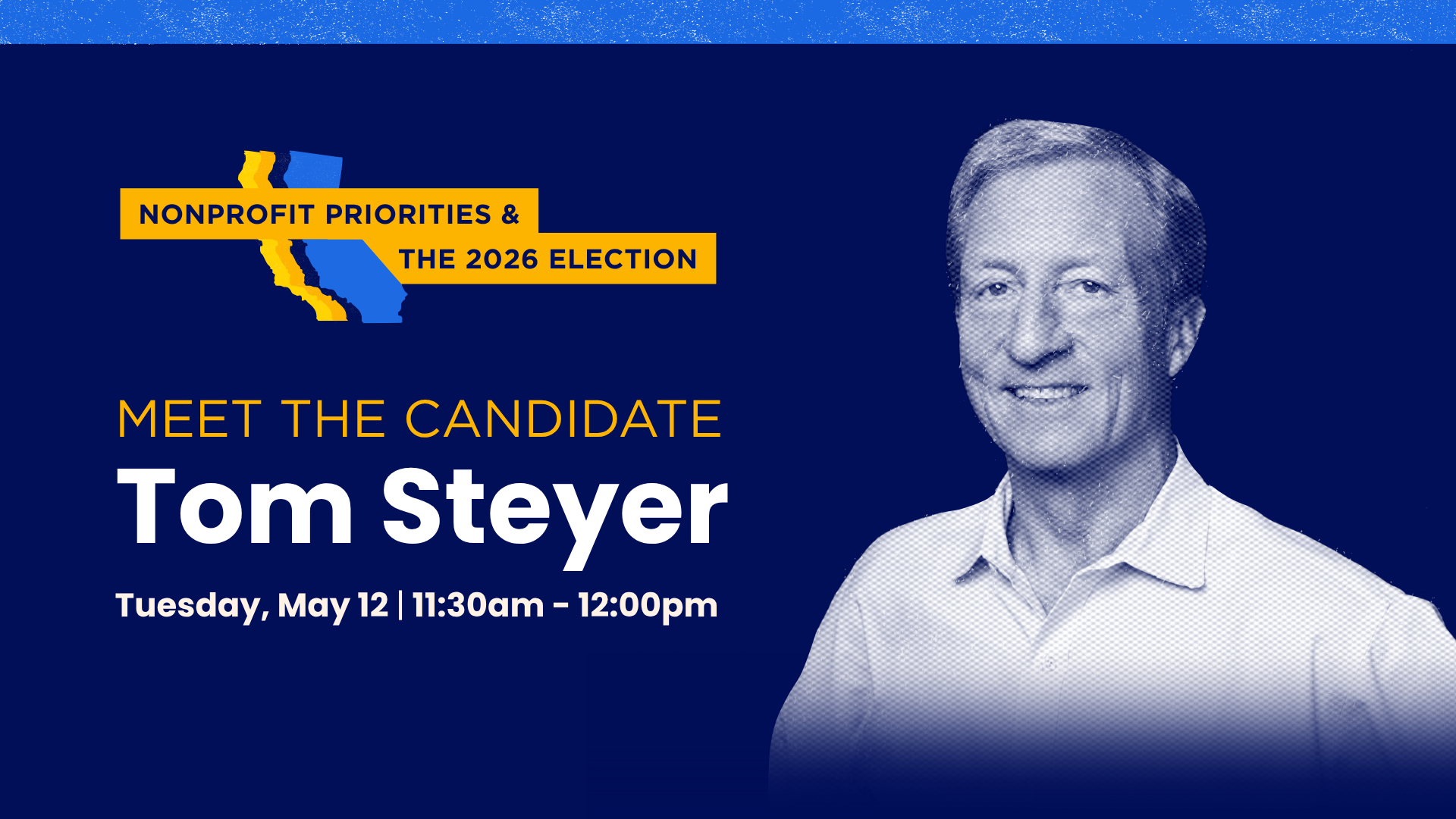
All candidates who had qualified for the ballot and were polling at an average of 5% or more in polls released between January 27, 2026 and May 13, 2026 were invited to participate. No other factors were considered.
| Candidate | Invitation Response |
|---|---|
| *Becerra (D) | No Response |
| *Bianco (R) | Participated on 4/30/26 |
| *Hilton (R) | Declined |
| *Mahan (D) | Declined |
| *Porter (D) | Confirmed – then Cancelled |
| *Steyer (D) | Participated on 5/11/26 |
| *Swalwell (D) | Declined |
| Thurmond (D) | Did Not Meet Polling Threshold |
| Villaraigosa (D) | Did Not Meet Polling Threshold |
| Yee (D) | Did Not Meet Polling Threshold |
NOTE: An asterisk (*) denotes candidates who met the polling threshold for a Meet the Candidate 1:1 invitation.
Disclaimer: These interviews are for informational and educational purposes only and are intended to educate voters on candidates’ stances on issues relevant to our organization’s mission. CalNonprofits is a 501(c)(3) nonprofit and is strictly nonpartisan. We do not endorse or oppose any candidate for public office and are prohibited from doing so under federal tax law. Any views expressed in these responses are solely those of the candidates and do not reflect the views or positions of CalNonprofits.
Voter Resources
Explore and share key educational resources to stay informed ahead of the November election.
Webinars
- CA Policy Forum | 2026 Ballot Measures: What They Mean for Nonprofits and Philanthropy
- CalNonprofits | The Nonprofit’s Guide to the 2026 Primary Voter Activation Strategies
- CA Policy Forum | Securing the Right to Vote: Election Protection Strategies
Resources

2026 Voter Engagement Guide for California
Nonprofit Vote & CalNonprofits | Practical, nonpartisan guide to help you support your community in registering, making a voting plan, and participating in the 2026 elections.

2026 Voter Guide: Propositions
CalMatters | Learn about each of the 14 propositions on the ballot and weigh the arguments for each through an interactive quiz.
